
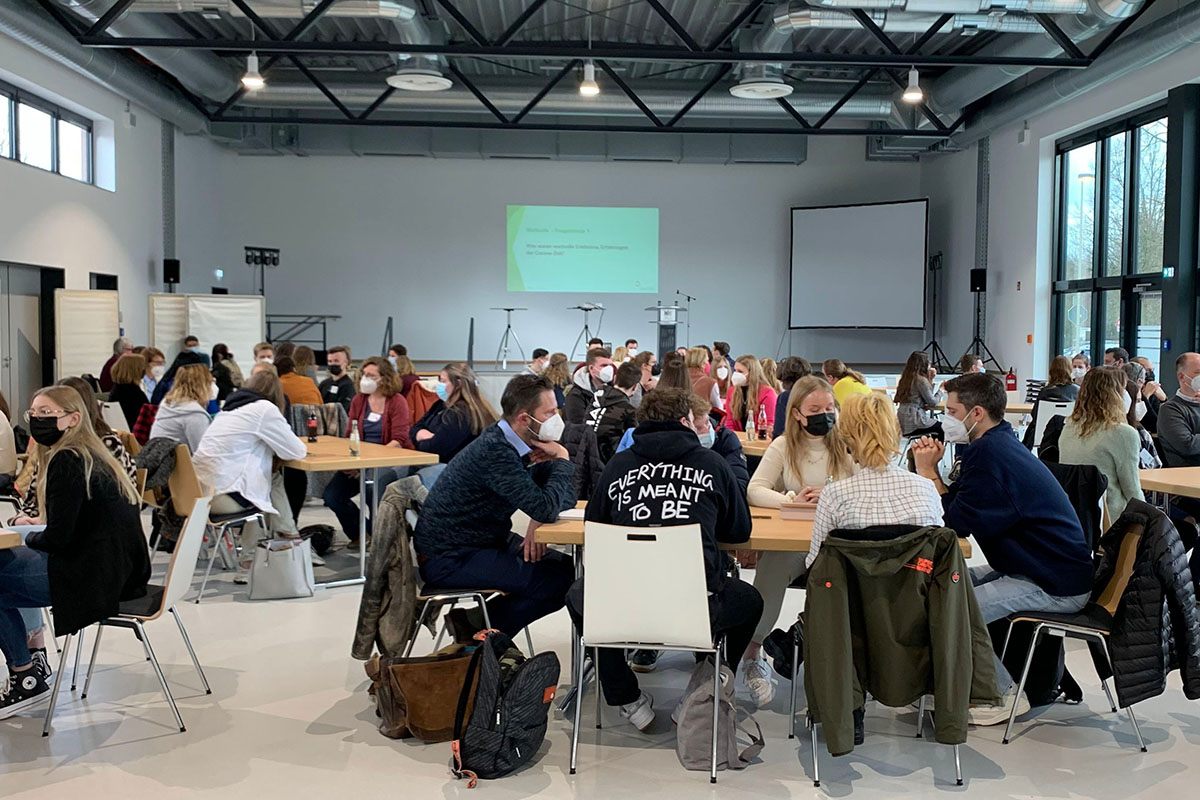
Future Workshop: School Life after Corona
Month: March 2022
Networking and impulse event for the co-creative design of an inclusive learning and working environment in schools
Corona has changed a lot and brought with it very special burdens, especially for school life.
The district of Heinsberg took this as an opportunity to invite pupils, teachers, school administrators, school psychologists and social workers from the district’s schools to a joint dialogue at eye level in Erkelenz on 14 March. In addition to all the impositions that this difficult time has demanded of many, the aim of this event was above all to recognise needs and potentials for shaping schools in the future: Were there also valuable experiences, experiences from the Corona time? What did we learn about ourselves and others? And what possibilities and opportunities can we make fruitful for future school development – with and without Corona – and how? I had the pleasure of co-designing this all-day interactive dialogue event with the group “Back to life” (an initiative of committed school psychologists and school social workers from the Heinsberg district). In the run-up to the planning, we had hoped to be able to hold the event in happier times. However, having already been postponed once, the sad events of the Ukraine war and the continuing high Corona numbers make it clear how urgent and important it is to draw our lessons from times of crisis in order to shape a more liveable, crisis-proof future.
Positive Leadership for Vibrant Organisations
Month: March 2022
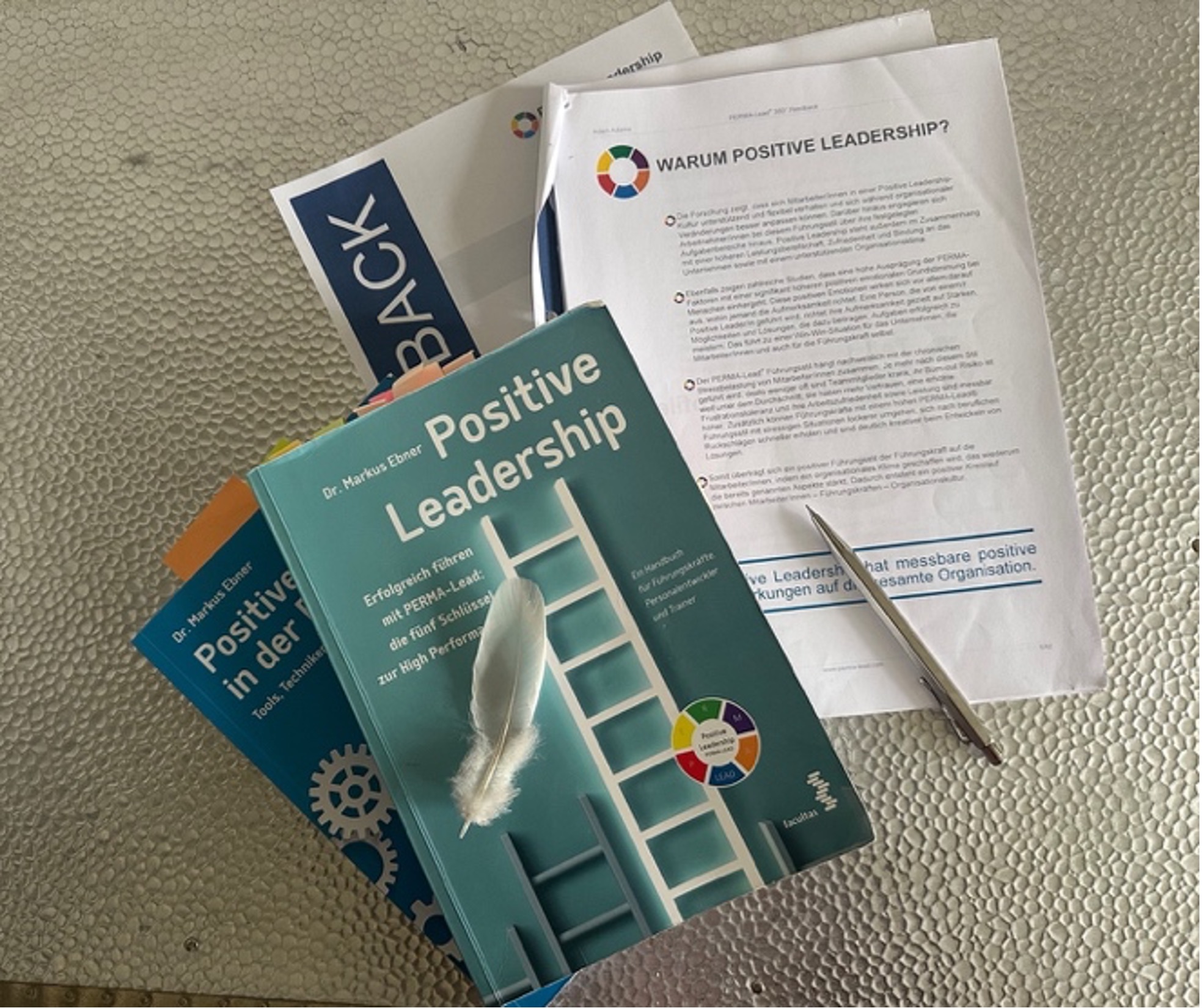
Designing processes with PERMA-Lead 360°Feedback
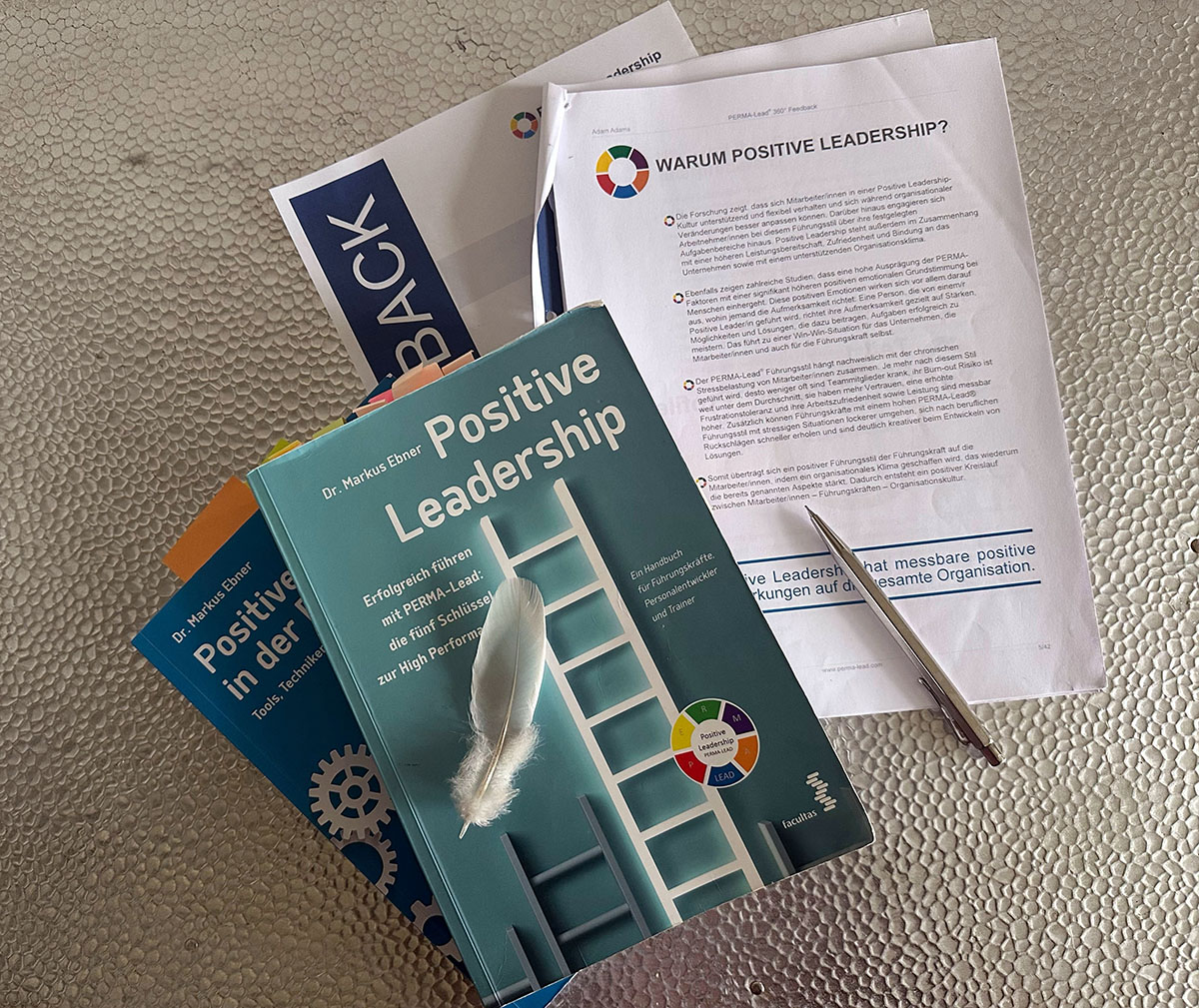
Effective feedback processes are like oxygen for the vitality of organizations. Agile organizations, in particular, need collaborative leadership and sustainable team structures. Yet many teams and leaders shy away from feedback, especially when they think they have to convey or receive “difficult messages.” Deficit-oriented evaluation criteria often contribute to feedback discussions and 360° feedback processes being misdirected, avoided, or even feared in the day-to-day operations of many institutions and companies. The Positive Leadership approach provides evidence-based strategies for using the appreciative principles of PERMA Lead to increase team satisfaction, motivation, and, consequently, productivity. In doing so, we examine the foundations of long-held beliefs about good leadership:
- Why is leadership based on “facts, force, and fear” a thing of the past, even though it’s still a sad reality in many organizations?
- Isn’t it the role of leadership to sometimes clearly address problems and point out what isn’t going well?
- Doesn’t positive leadership run the risk of fostering an atmosphere of “harmony at all costs,” where nothing critical can be addressed and every failure is glossed over as a success?
- And how can 360° feedback, in particular, help make it harder for narcissists to rise through the ranks in organizations?
I’d be happy to discuss the potential applications of this approach in a one-on-one conversation.
